STUDIO MOZAMBIQUE | UTK M.ARCH
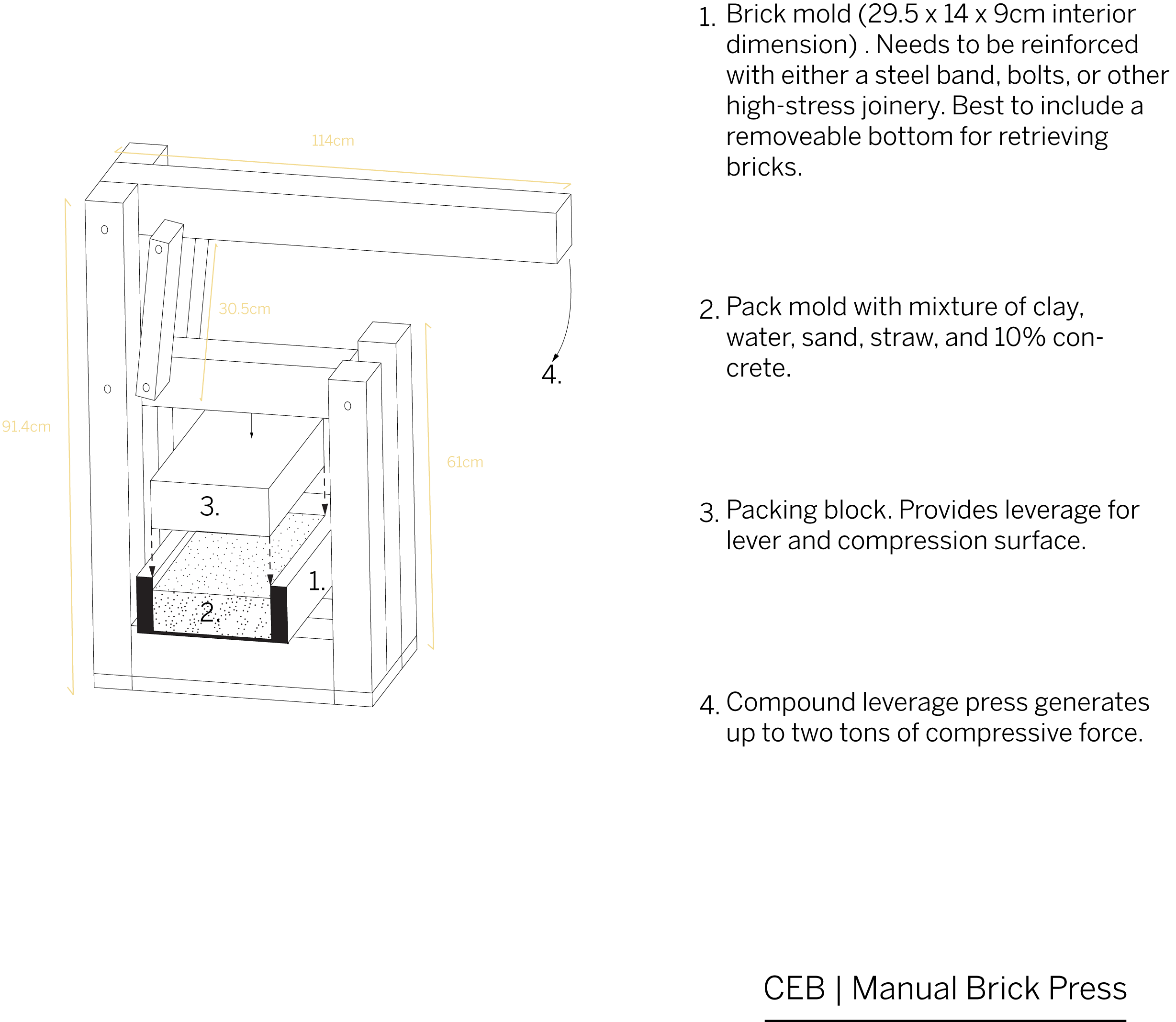
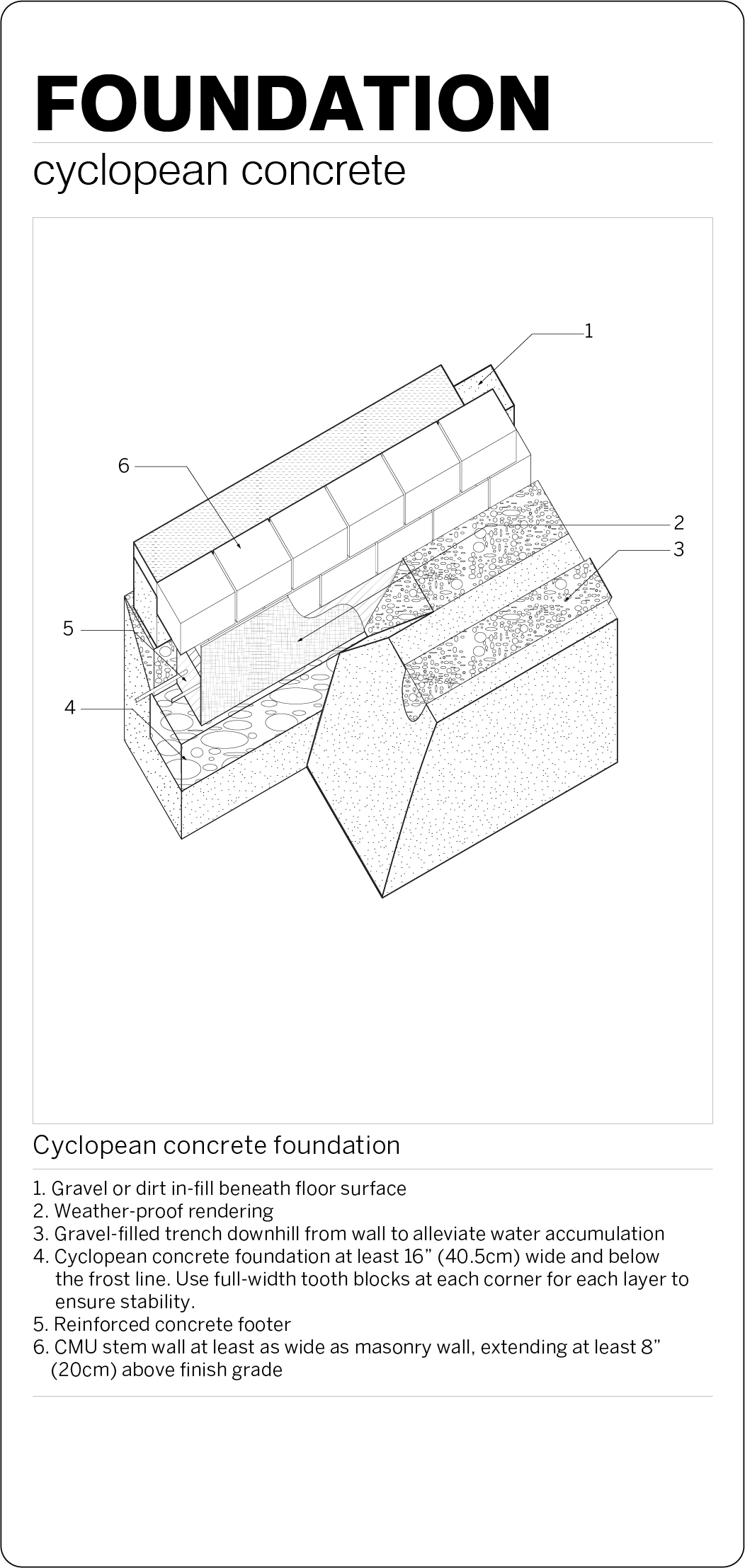
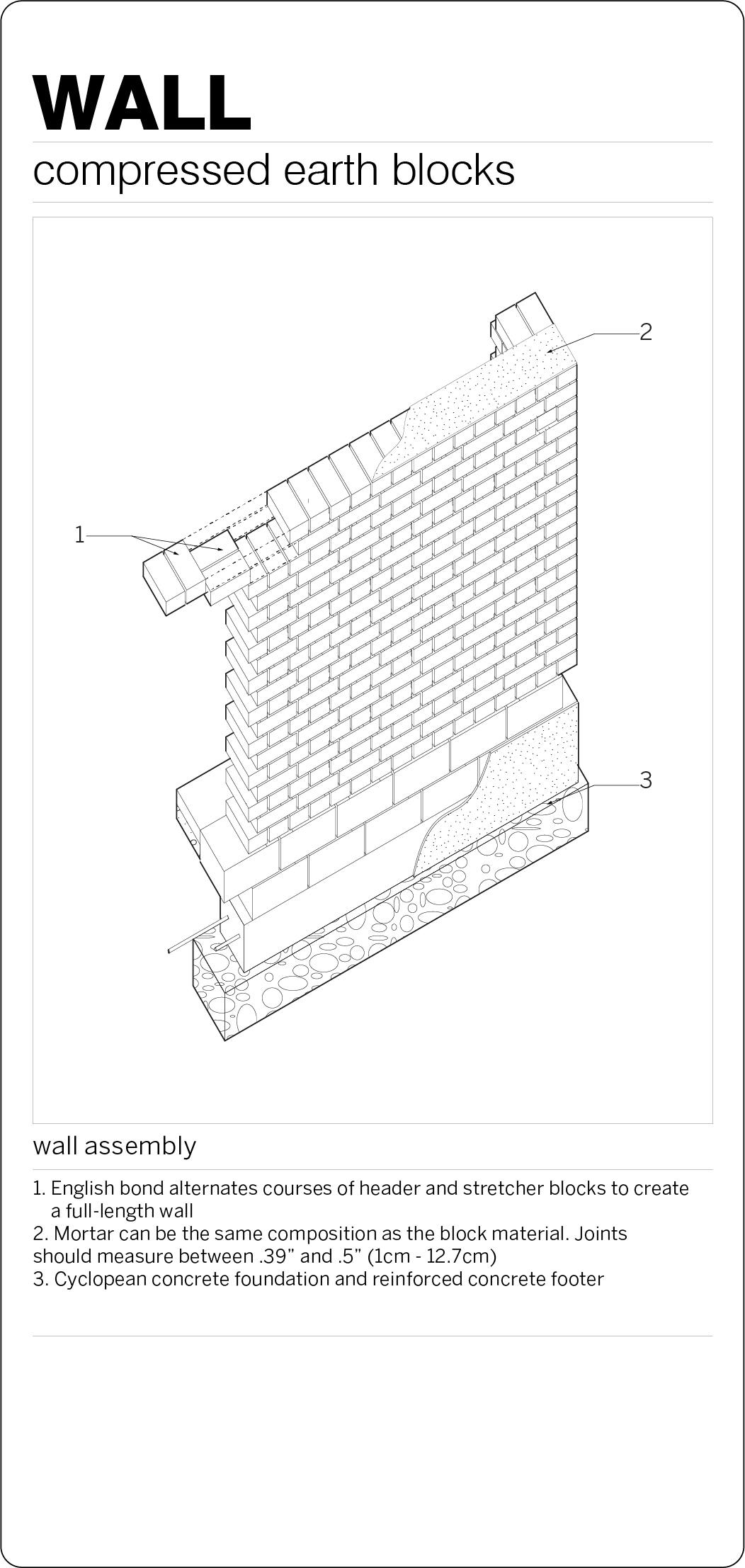
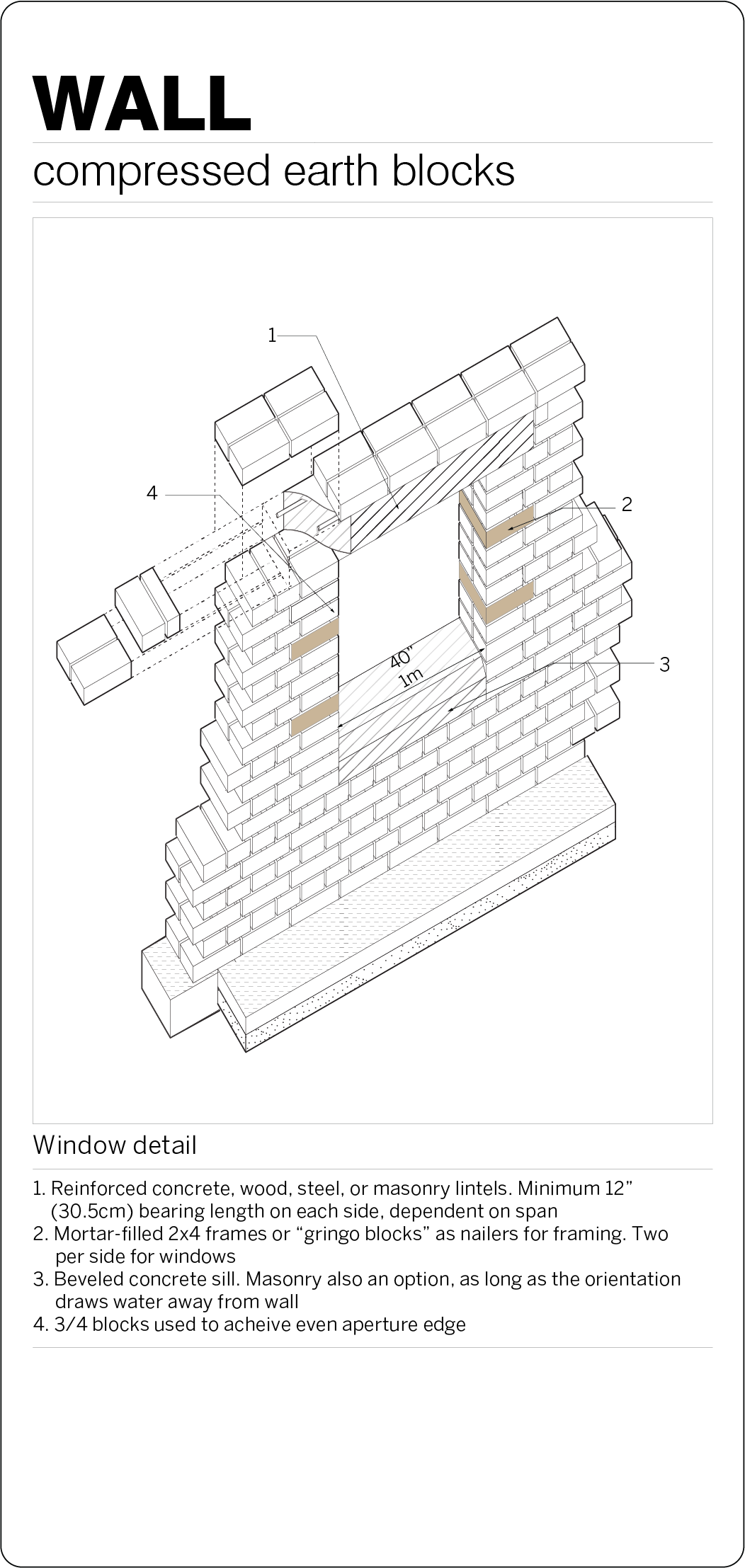
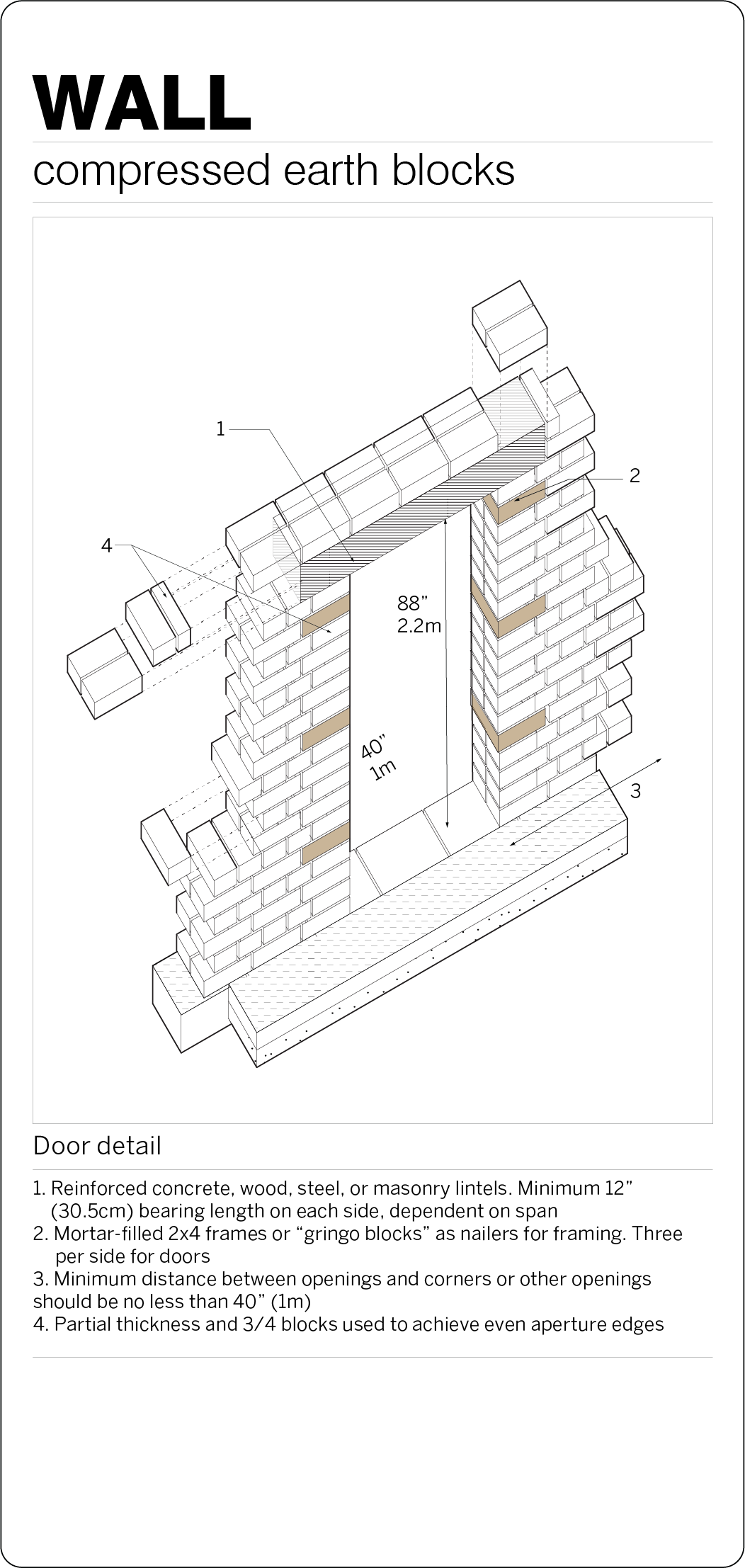
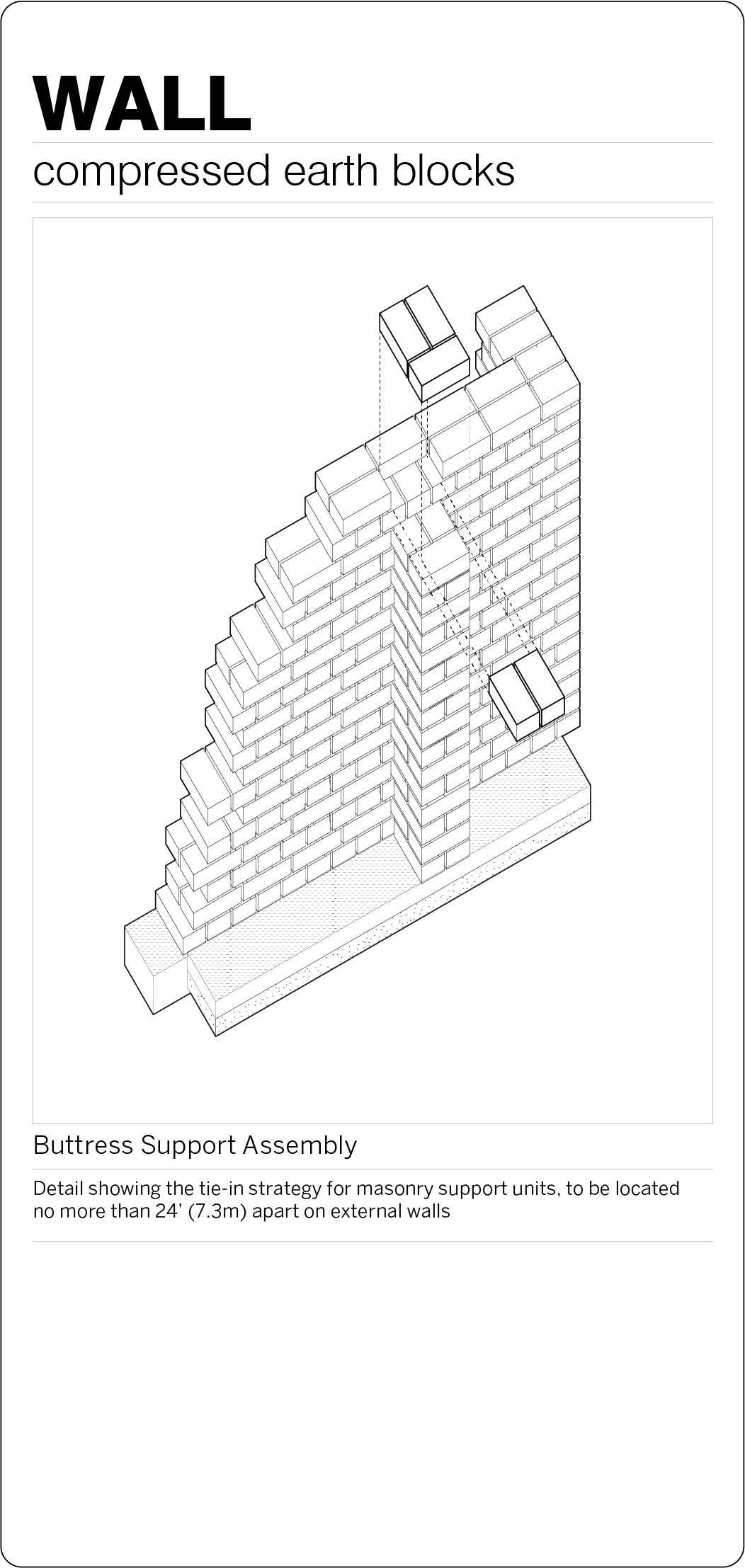
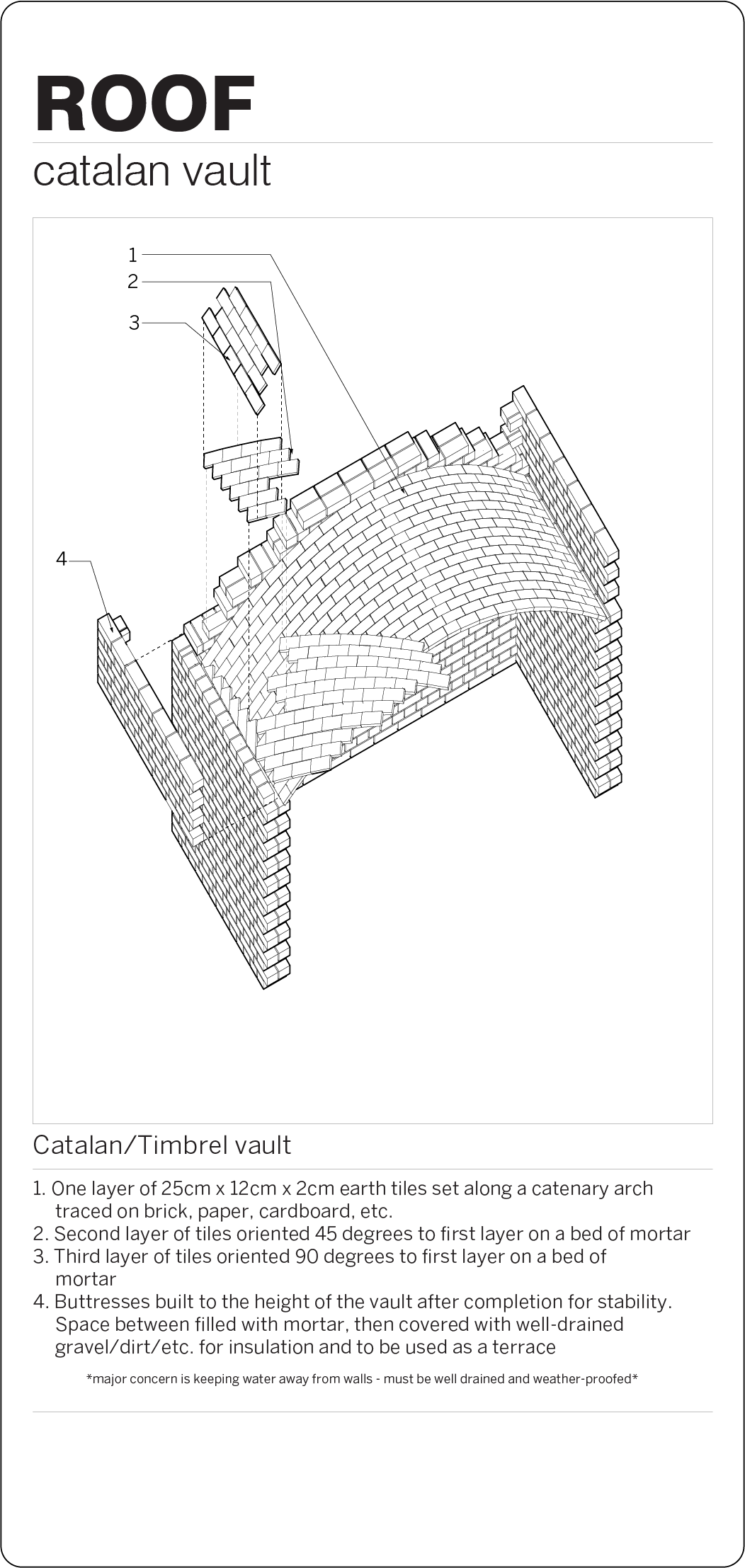
CLASS TYPE: STUDIOPROFESSOR: MAGED GEURGISSEMESTER: FALL 2020Located on the southern outskirts of Chokwe, Mozambique, Hlauleka School is a semi-private Christian primary school that pledges a portion of tuition proceeds to housing, feeding, and educating children orphaned in Chokwe’s pervasive periods of famine. Only four miles from the Limpopo River, the school is also highly susceptible to severe flooding from heavy rains and cyclones. The proposed master plan and building designs for the 34,000 square meter secondary school fosters a sense of safety, community, and food security. The selection of compressed earth blocks (CEB) made from the red clay soil on site provides a cheap - though labor intensive - construction method typical to the region and capable of withstanding the Mozambican climate.
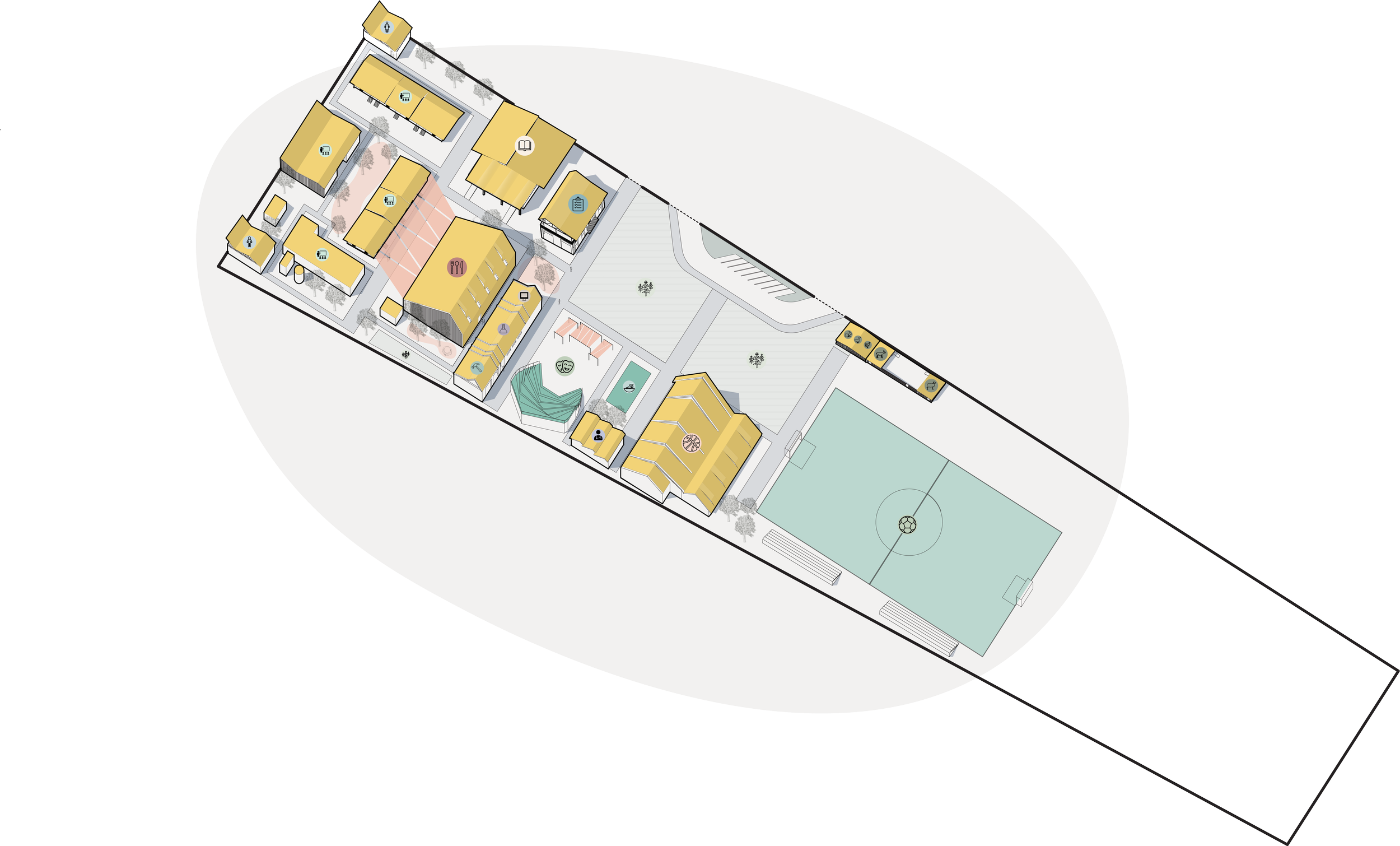
The grid-based master plan creates five programmatic strips joined by a network of avenues that mirror the existing urban grid of Chokwe. The compact design is intended to emphasizes a sense of security, flexible community space, and legible circulation.
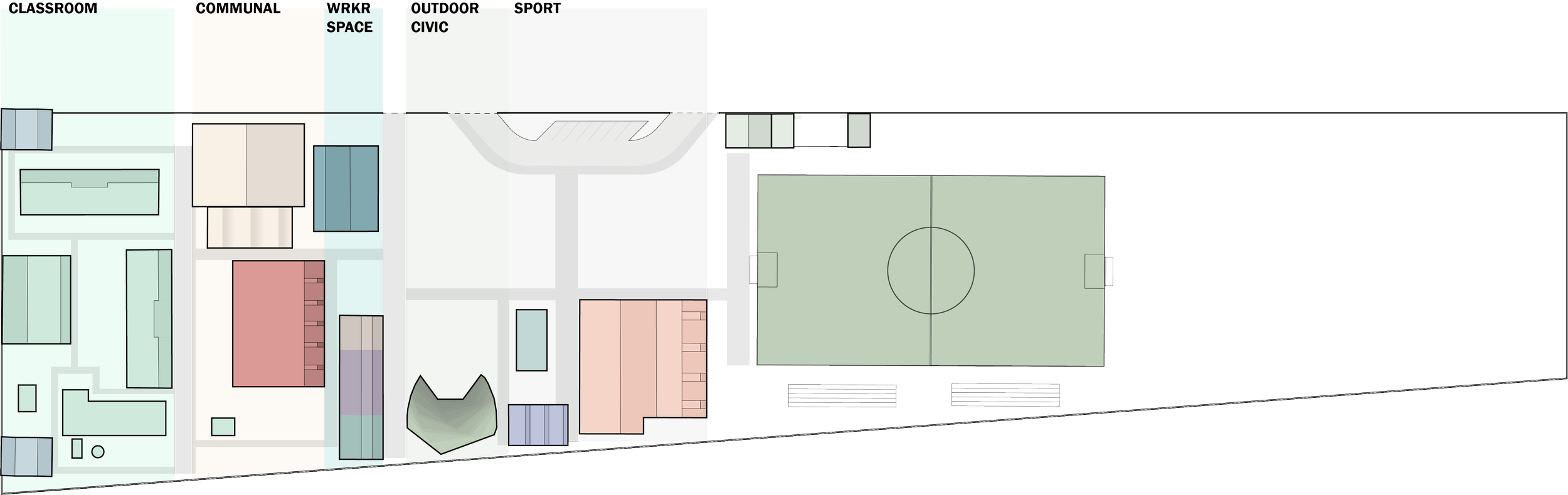
Programmatic strips organize the major functional groups of the campus.
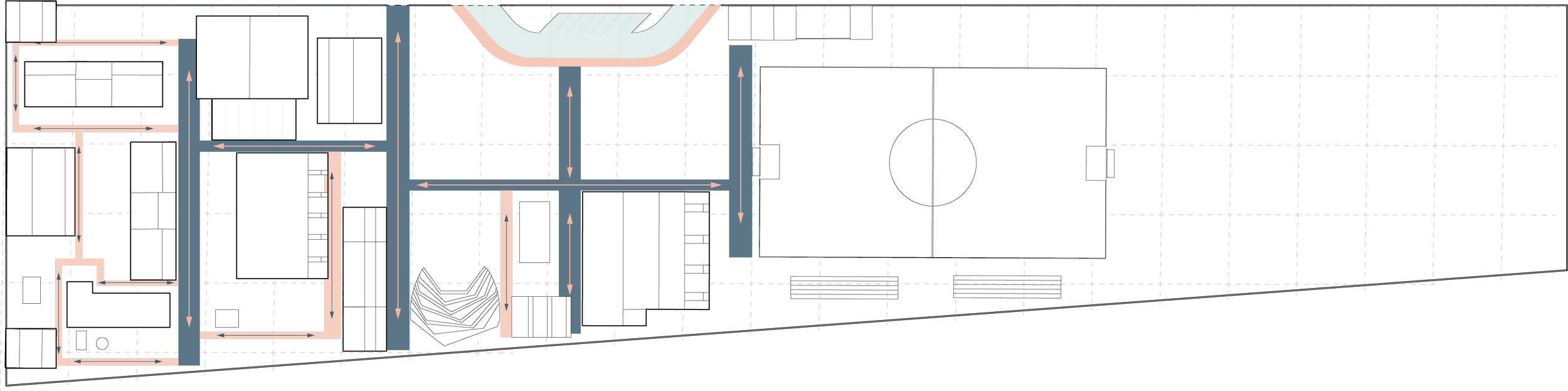
Gridded circulation ties the site into Chokwe's existing urban grid. Main arterial avenues in blue operate in conjunction with the secondary exploratory avenues in pink.
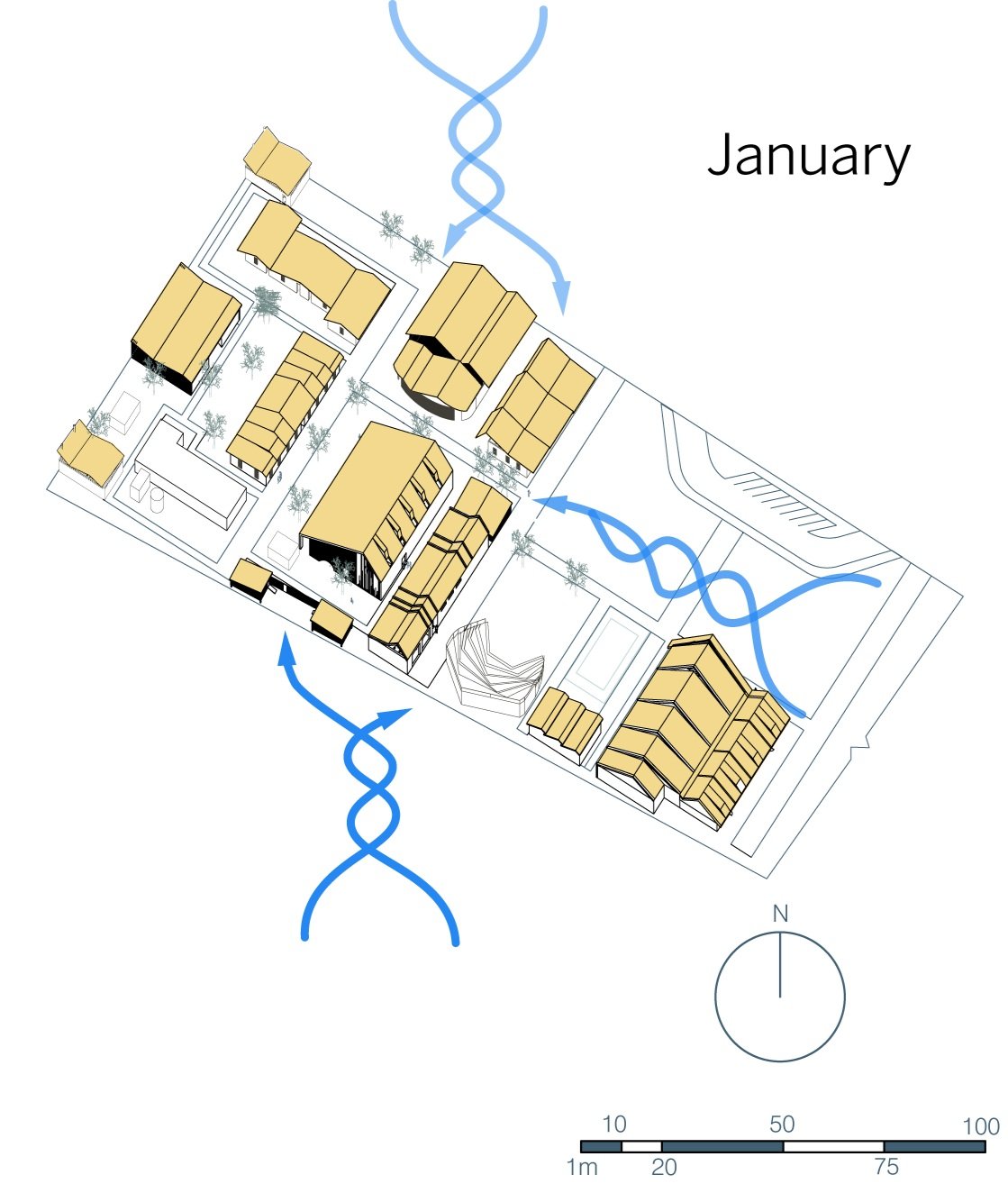
Wind plays an important role in site planning, as frequent winds from different directions kick up a significant amount of dust.

For a resource-limited project, considerations of sun path and solar gain are critical for building placement and typology.

Sun path animation
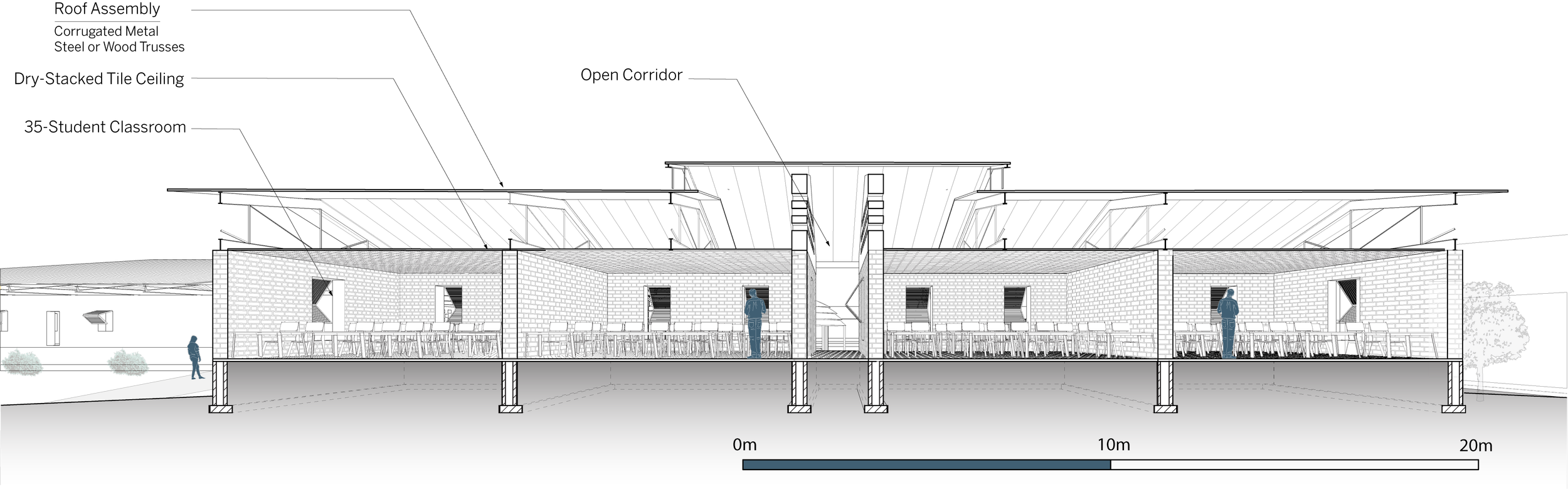
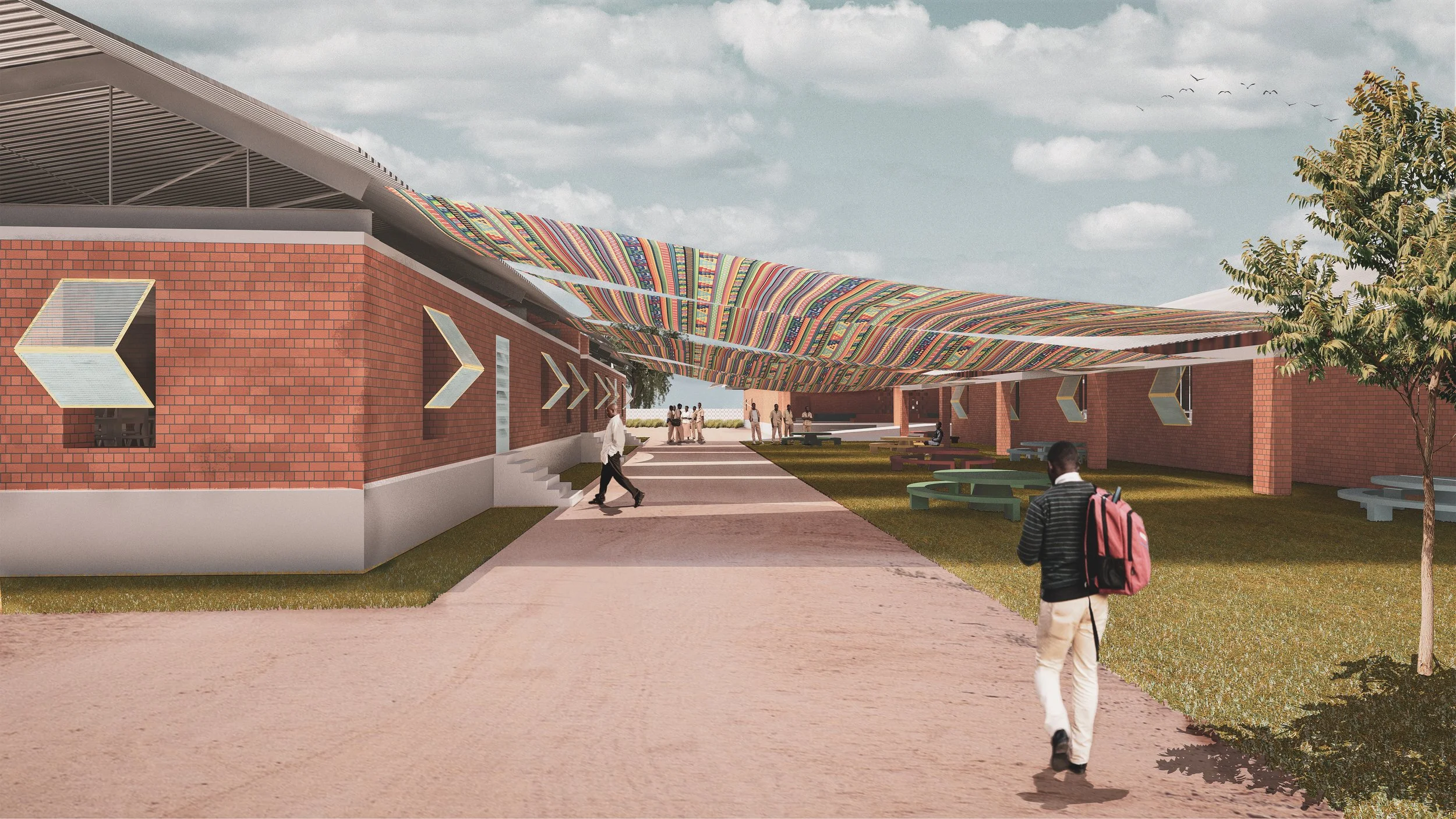
Four-room school house featuring a dog trot and abundant, operable apertures for improved circulation and dust control.
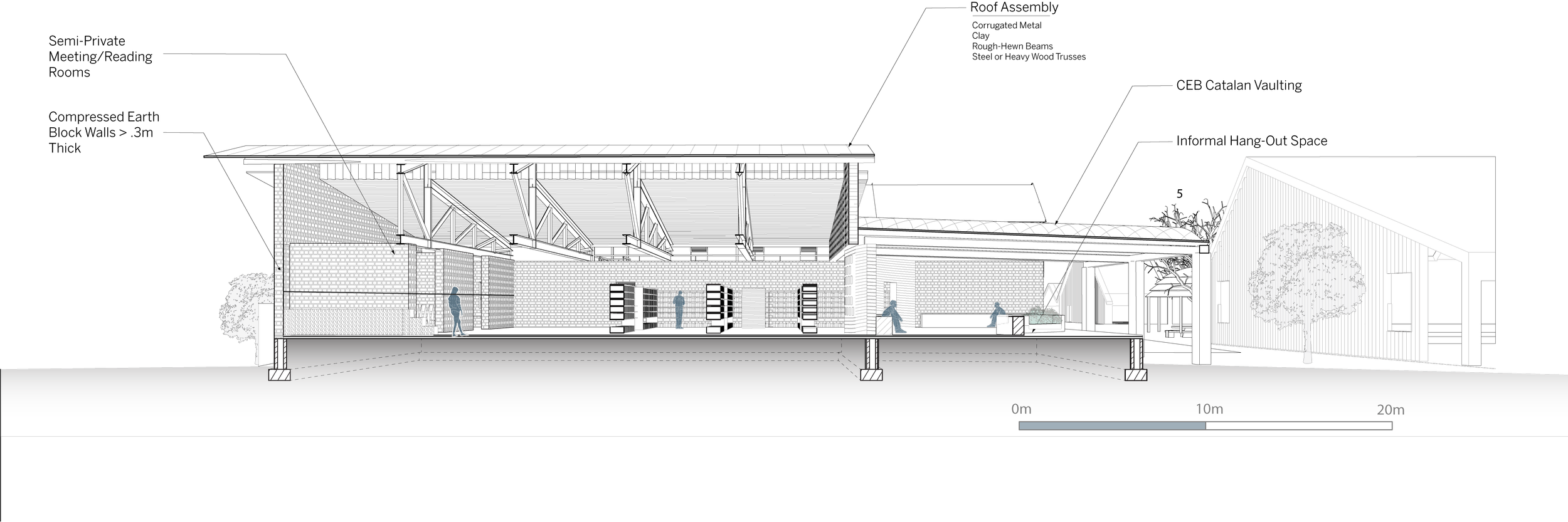
Library section showing the interior "inner sanctum" and a covered exterior space for informal learning and socializing opportunities.
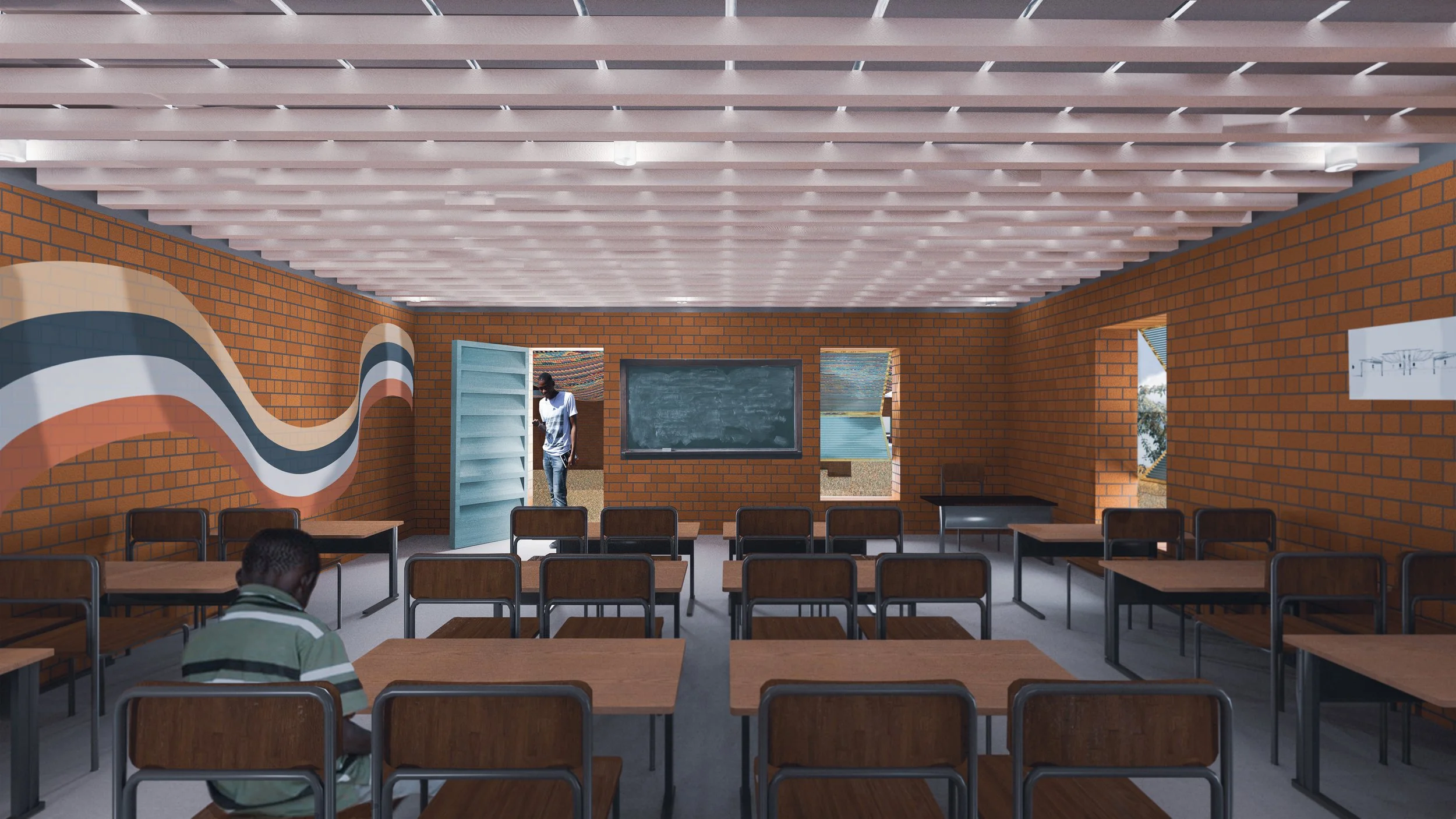
Classroom interior highlighting the operable shutters, dry-stack tile ceiling, and low-tech bottle lighting.
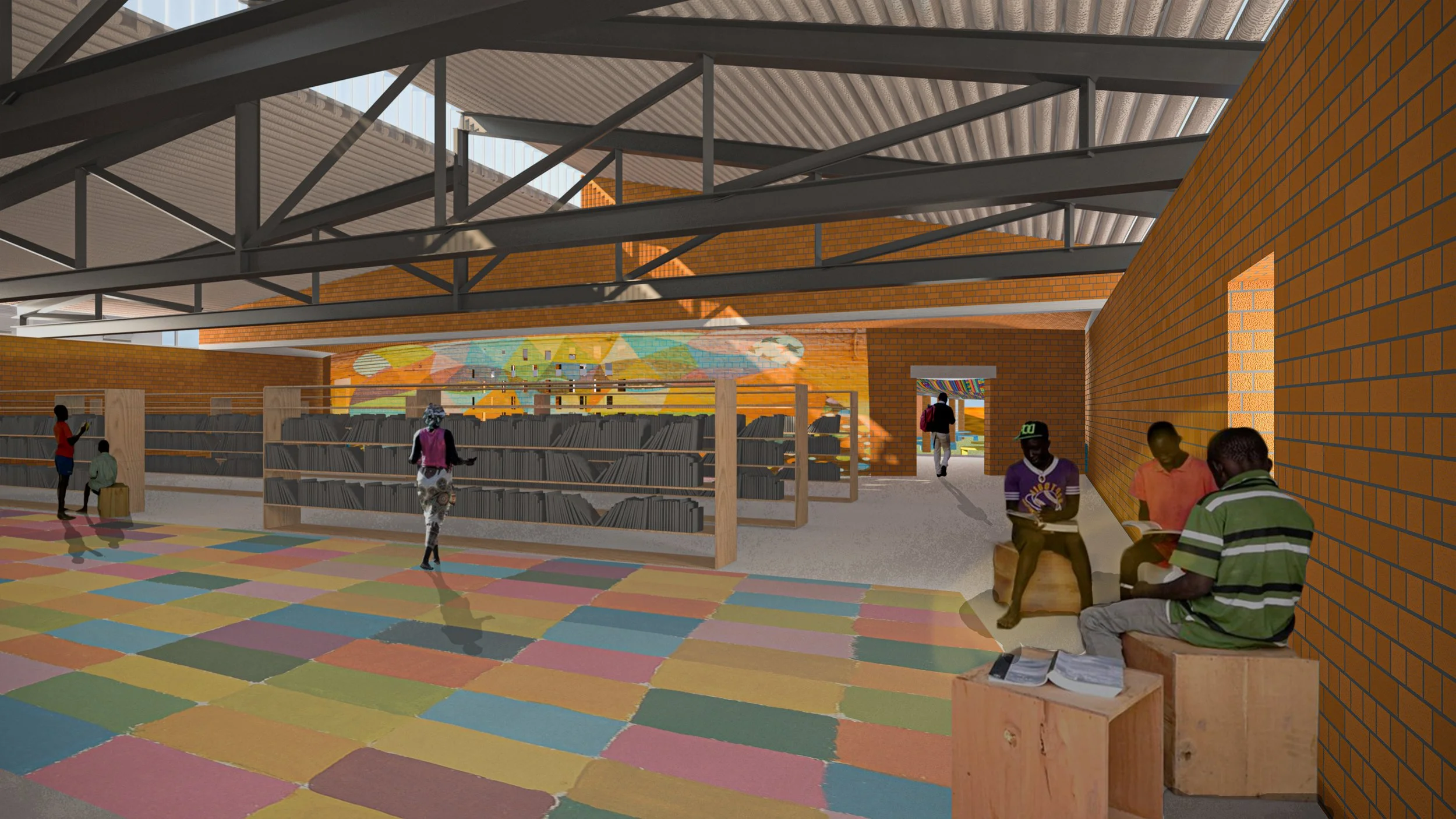
Library interior utilizing paint as a low-cost option for bringing personality and vitality into an otherwise basic space. The clerestory roof introduces additional daylight into a wide plan.
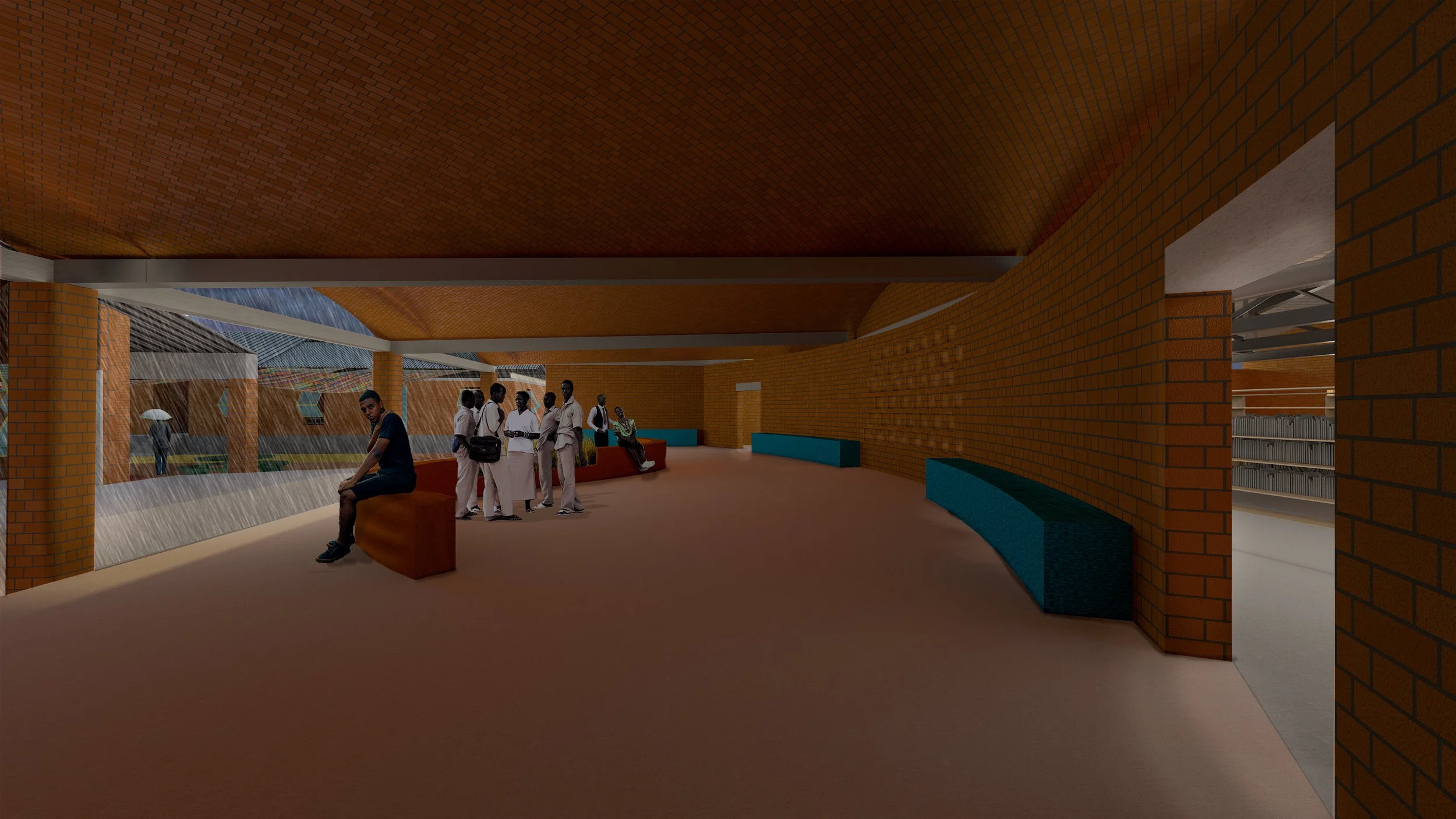
Library exterior patio for social gathering, shade, and informal learning.